Tag: neurodivergence

  • honouring our passions

    honouring our passions

    In this blog series, I am getting curious about attention. Why can it be so hard to pay attention to the things we want to? Why do we give so much attention to things we’d rather not? And how can we harness our attention? I approach these questions from a personal perspective, in the hope that this may in some small way contribute to ongoing conversations about how we can practice attending to what really matters.

    This is post two out of five. You can read part one here.

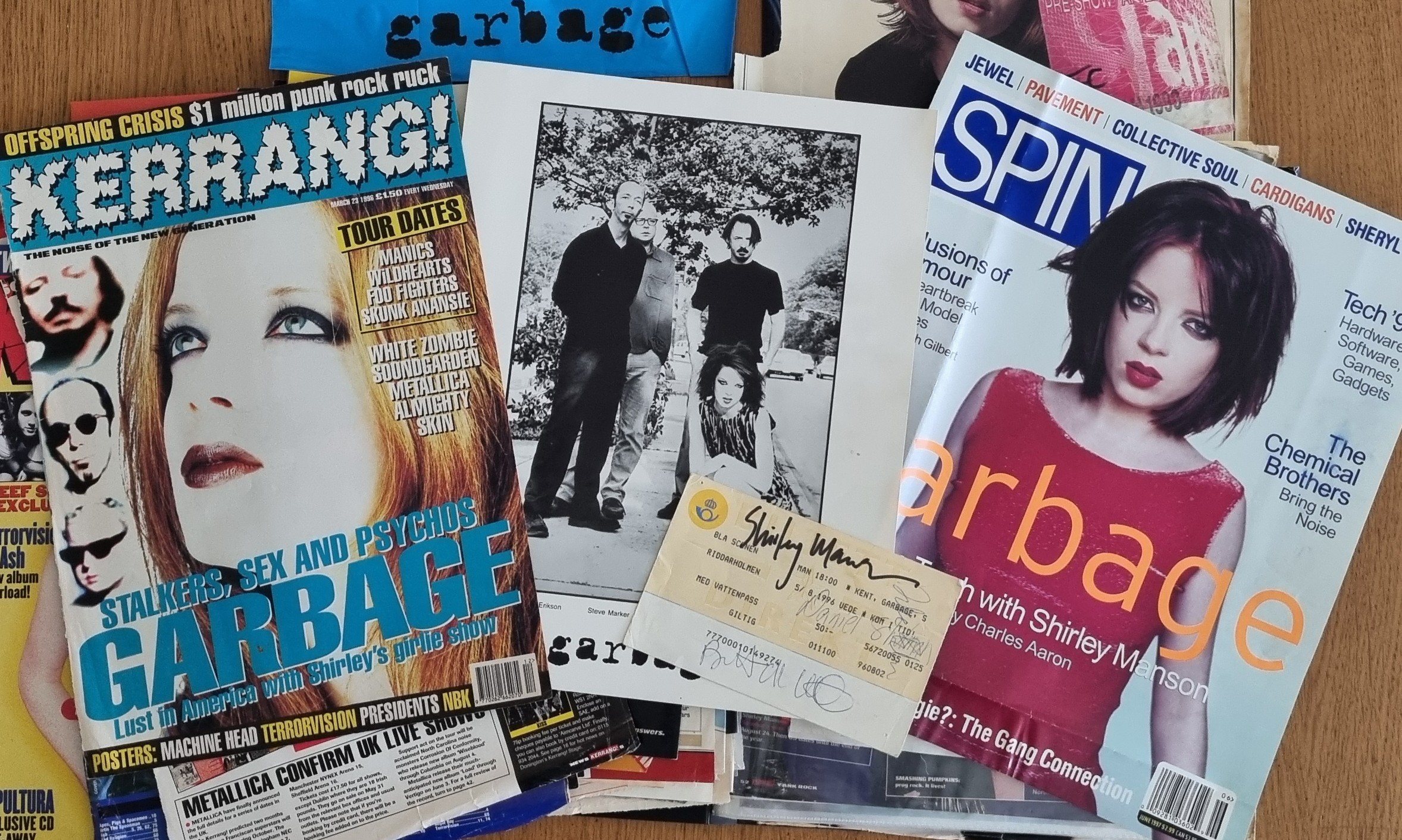
    One sunny August evening at the Stockholm Water Festival in 1996, my life changed. On my family’s annual visit to Sweden, I, together with my one local friend, went to see the rock/pop band Garbage. I already had their debut album, which I had listened to a fair bit, but that night things changed. Seeing the band’s singer, Shirley Manson, perform live, I was hypnotised. By the time Shirley signed my ticket stub after the show, I was a capital F Fan.

    My love of Garbage/Shirley felt like the defining aspect of my identity in my late teenage years. I listened to their music every day. I collected magazine clippings and all the singles. Whenever I could get online, I searched for information about them. Once I had my own email account, I joined a fan listserv, where hundreds of us gathered to discuss all aspects of the band and the music. I learned HTML so that I could create my own fan-site. I got knee-high boots and wore them with a corduroy miniskirt, like Shirley.

    I finally had the opportunity to see the band live again after they released their second album. By that time, I was at university in London, and they had reached the dizzy heights of a sold-out Wembley Arena gig. A couple of days later, desperate to stave off the despair that descended after such a monumental and highly anticipated event, I got a train to Manchester to see them again, hanging around with other fans outside the venue in the early afternoon to catch a glimpse of the tour bus as it arrived.

    I have had many other intense, passionate interests in my life, both before and after my Garbage era. None have been as intense (although my Jodie Foster phase in my early teens may be a close second!), but usually there is something or someone occupying a lot of my thinking and feeling space. In my younger years, it was animals, then pop stars, actors and musicians. In my adult life, people have continued to feature, but also broader subjects, such as feminism and, in more recent years, writing and creativity.

    It was reading about what autistic “special interests” can look like for those of us socialised as girls/women that sparked some of my initial recognition of myself as autistic. One of the reasons why our neurodivergence is more likely to go under the radar is because our interests may sit within normative cultural expectations (it is not unusual for young people assigned female to be fans of pop bands or to love animals, for example). There is also a stereotype that autistic people’s interests don’t change over time, which is not true for many of us. The divergence lies mainly in the intensity of our interests.

    But this blog post is not only about autistic special interests. More generally, what I’m exploring here is interested attention: when our attention is immersed in a topic that is deeply interesting to us. I want to make a case for the importance of honouring this form of deep attention and everything that it can bring to our lives.

    the wisdom of our interested attention

    Over the last few years, I have had periods of time (ranging from a couple of weeks to a couple of months) when I’ve intensely immersed myself in learning about, reading and writing poetry. Notably, they have coincided with times when I’ve been feeling particularly overwhelmed.

    I find this so interesting to notice: when I am overloaded, I turn to poetry – as a creative outlet of personal expression, but also as a form of art that I want to submerge myself in and learn about. Perhaps it’s because poetry doesn’t demand as much linear “sense-making” and explanation as prose writing. In times of overwhelm, writing narrative, coherent prose can feel like too much. But, as I still find reading and writing meaningful, my attention switches to poetry. It seems almost subconscious. Poetry is an invitation to slow down and pay attention to the beauty and wonder of words – an invitation my subconscious accepts.
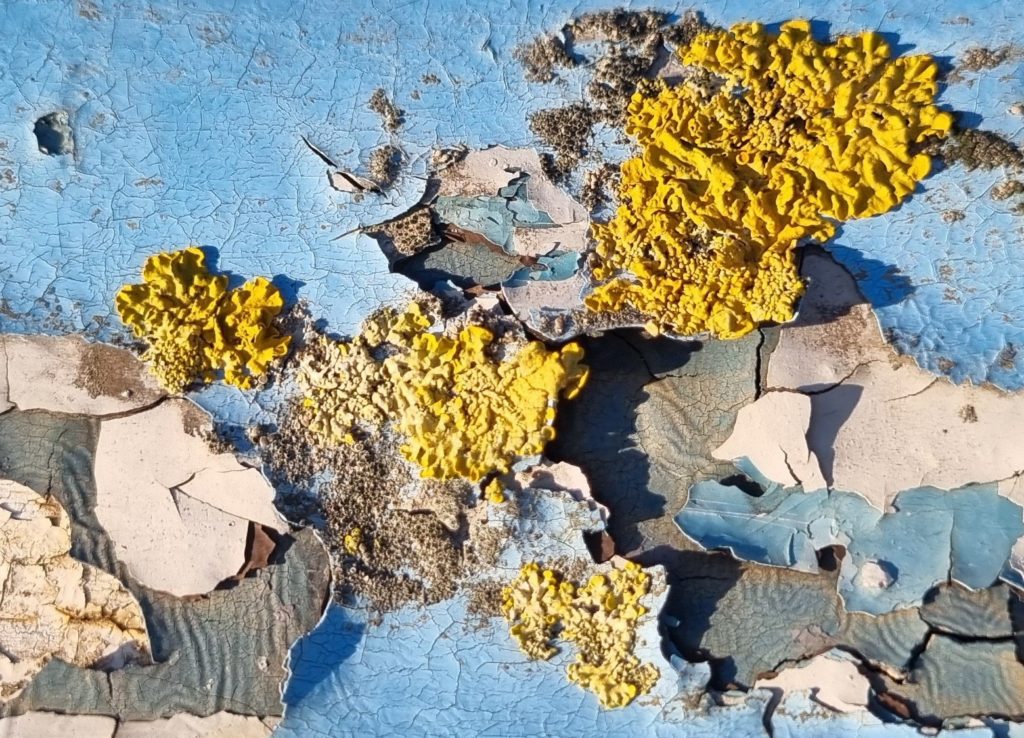
    Yellow lichen growing across a weathered metal fence covered in cracked, peeling blue and white paint.

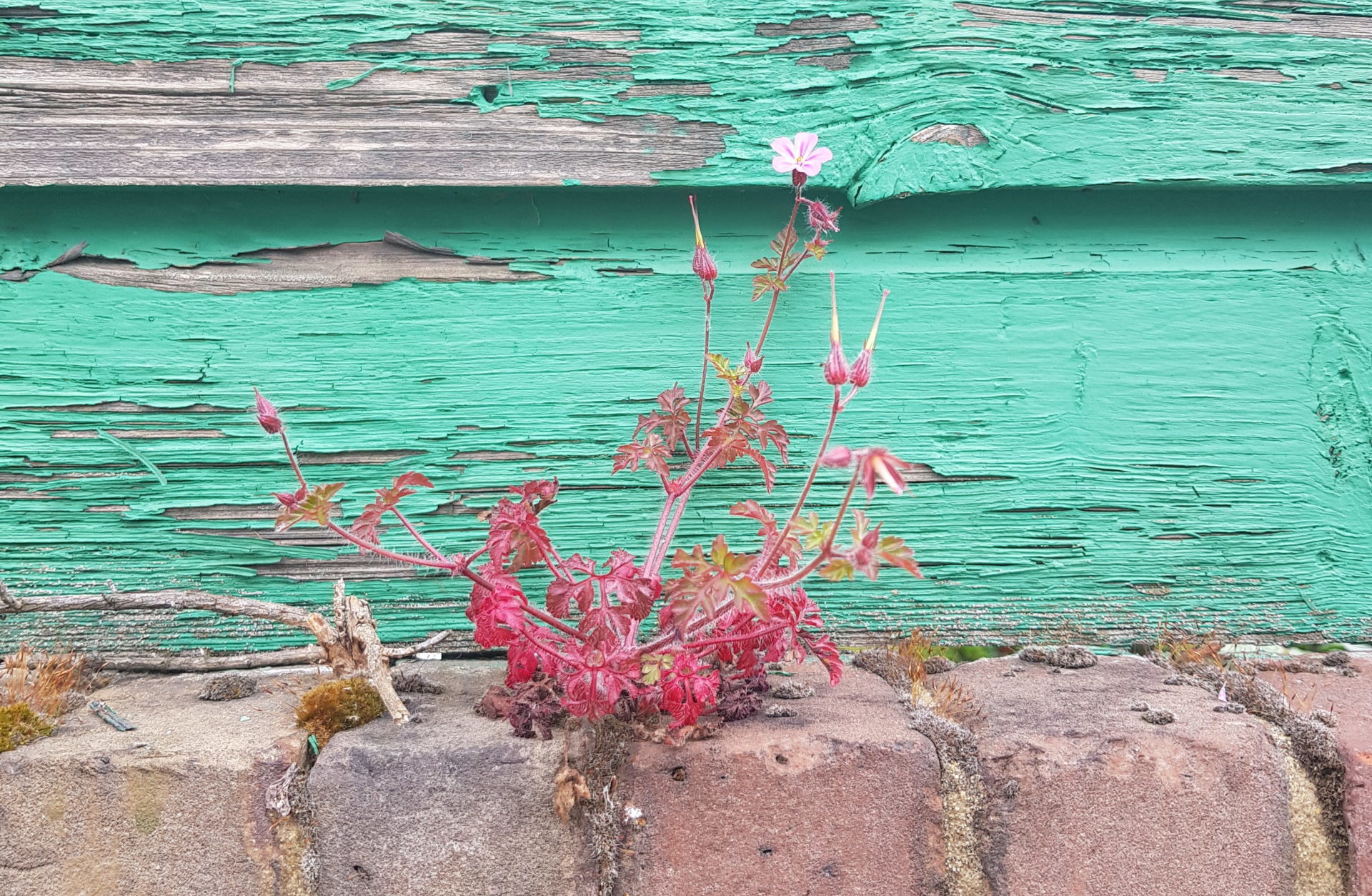
    This kind of detailed, sensory and slow attention can also direct me towards beauty in my physical surroundings. When I am walking along the streets in my neighbourhood, my eyes and hands gravitate to small details: the pattern created by paint peeling off a doorway, the texture of moss on a wall, the contrast of colours on a rusty fence. While intense sensory attention has its downsides, it gives me an appreciation of the beauty of small things. A well-crafted sentence. The quality of light in a room. It is a kind of creative attention.

    With both poetry and my physical surroundings, it is like my body knows that this is what I need before the conscious part of my being does – it directs me towards things that absorb my attention in a creative, vibrant way. Overwhelm for me often manifests in the form of withdrawal and shutdown – a state that can be hard to think my way out of. Instead, I am learning to let this different kind of embodied wisdom lead me towards the things that interest me and call my creative attention, leading me to regulate my nervous system and feel more connected.

    letting go of shame

    For a long time, I carried a lot of shame around my intense interests. I have often downplayed or hid them, seeing them as embarrassing obsessions – evidence that there was something wrong with me. Even now, over twenty years later, I feel some embarrassment writing so candidly about my Garbage fandom era and I had to fight the urge to mock my younger self.

    Post-diagnosis, I’ve been trying to reframe this personal trait more positively. Part of my unmasking process has involved unpicking that shame and learning to honour my passionate interests – noticing what this passion brings and enables and allowing myself to embrace what is pulling me in, without “shoulds” or shame.

    This can be easier said than done. Even as I was writing this post, I noticed a familiar “should” coming in. This part of me wants all my interests to in some way be useful – to go beyond pleasure and enjoyment for their own sake. Devon Price writes about this in Unmasking Autism:

    If an adult fills their evenings after work learning to code or creating jewelry that they sell on Etsy, they’re seen as enterprising. But if someone instead devotes their free time to something that gives them pleasure but doesn’t financially benefit anyone, it’s seen as frivolous or embarrassing, even selfish. (p. 152)

    I definitely notice this pull towards economic productivity in myself, but also, perhaps even more strongly, I notice a sense that I should be putting my time and energy towards something more “worthy” – that I should be spending the time I devote to my personal passions to doing things that directly contribute towards social justice struggles.

    But I am pushing back on this. It is not an either/or. Embracing our passionate interests without shame not only gives us joy (which is enough of a reason in and of itself), but also helps us build our personal skills, strengths and creativity. When I think back to my Garbage era, what I remember most fondly was the connection with other fans. I dared show what felt truest about me to other people, which gave me practice in forming and being part of a community. Embracing the interests that regulate and nourish us builds our capacity to be in the world.

    our passion is our creative fuel

    This push/pull between what’s capturing our attention vs. what we think we should be doing to be “productive” or “useful” relates to our creative work, too.

    When I’m in a poem-writing phase, I notice how quickly a judgemental voice enters, concerned about quality and progress. My poems are no good. Why am I spending time writing bad poems instead of writing blog posts or essays to submit for publication? When will my poetry be good enough to publish? I have to guard so fiercely against this voice – to protect the pleasure I get from playing with poetry without it immediately tipping into an external-oriented desire for recognition.

    This is not to say it’s bad to be interested in improving my craft. But it is to say that we need safe space to play creatively with whatever feels most exciting (whether that’s making poems, collage or cakes). That space matters for its own sake. It reminds me of Sarah Teresa Cook’s powerful insistence that our personal creative practices matter: that “it is the act of making that enriches your life – not the reception of your output”.

    Even if I never share any of my poems with another person, it still matters that I write them. It gives me pleasure and deepens my understanding of myself, my feelings and my relationship with the people and world around me. Not to mention that poetry is a whole other way of engaging with language and emotions – one that deepens my creative work across the board. Just as writing fan fiction or writing in a private journal helps hone our skills and attention as writers more generally.

    Relatedly, I love how Marta Rose reframes the shame that often accompanies “serial hobbies” and “abandoned projects”. “Dabbling is so undervalued, but there’s nothing intrinsically wrong with loving novelty”, she writes, noting also that “[w]hen we disrupt shame and have patience, you will be amazed at how many of your abandoned projects turn out to be practice rounds for new pleasures and new projects sometime in the future”.

    Following what calls our interested attention – even when it seems tangential or does not lead to any type “output” – matters to us as human beings just as it matters to our creative practice, building our attention muscles and capacity over time.

    our interests help us regulate, create and connect

    Our passionate interests are not shameful indulgences or evidence that there is something wrong with us. Interested attention helps us regulate, create and connect – with ourselves, first and foremost, but often also with others (human or more-than-human).

    You may be protesting at this point that it isn’t all so rosy: that our attention can also get intensely hooked into things that do not feel regulating or nourishing at all, but rather the opposite. I’ll be exploring this in the next post, on distracted attention.

    But, ultimately, it comes back to this: we can learn to listen to what our attention is telling us. When we notice our attention being pulled, we can practise discerning when something feels good in our bodies and when something is dysregulating (and some interests may well bring up a range of different responses at different times). In this way, we practise listening to our bodies. And when an interest genuinely does feel nourishing and regulating, and it’s not harming anyone else, we can practise giving ourselves permission to enjoy it and everything that it brings to our lives, without shame.
  • listening to what our attention is telling us

    listening to what our attention is telling us

    attention: ad (to, towards)+ tendere (stretch). To stretch towards.

    Some years ago, I was captivated by a phrase:

    What you pay attention to grows.

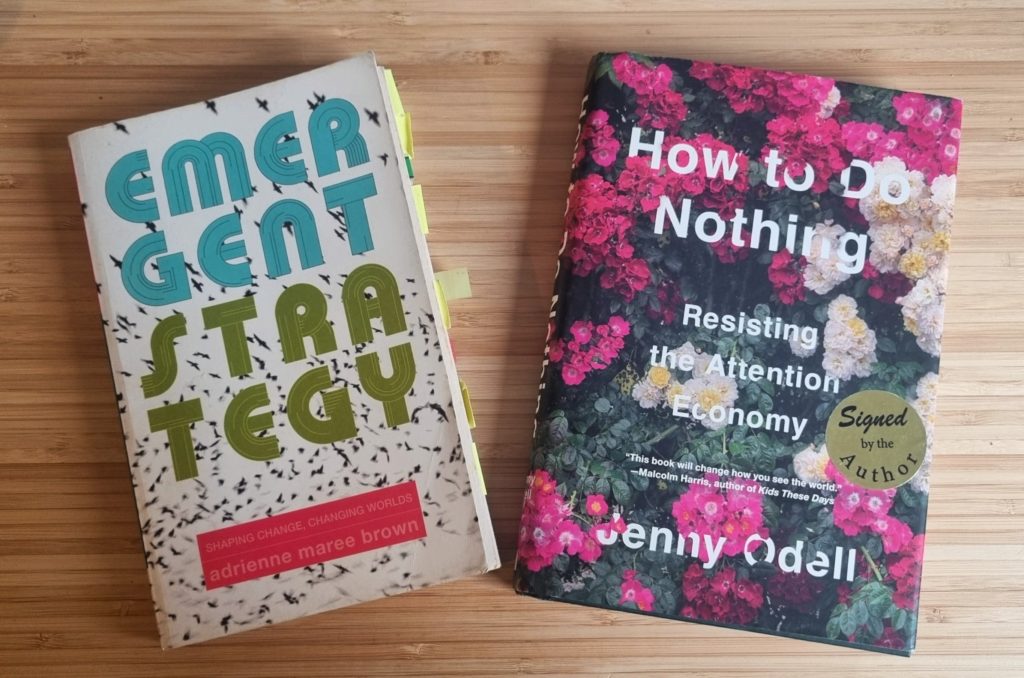
    It comes from adrienne maree brown’s Emergent Strategy: Shaping Change, Changing Worlds and it is one of the book’s key principles. This idea felt so powerful in its implications that I started writing it down repeatedly in my journal and yearly intentions.

    I’ve been holding this phrase close again lately, as I’ve been trying to pay attention to my attention: Where it goes and where it doesn’t. Why it so often feels like I have no control over it. How I can be more intentional in where I place it.

    Attention has always felt tricky for me. I know I’m hardly alone. It is a topic on which so much has already been said – by writers and artists, productivity gurus, psychologists, scholars and many others. I’ve hesitated writing about it for this reason. My academic training tells me I don’t know enough about it. I haven’t conducted a thorough literature review.

    But precisely because of that trickiness – and because our capacity for attending to what matters to us is so central to our experience of our lives and our creative practice – it is a topic I keep circling around. “To pay attention, this is our endless and proper work”, in the words of poet Mary Oliver.

    I wanted to get curious about my own patterns of attention: to notice how my attention swirls and circles, homes in or is lost – and to ask myself what happens in these different moments, what feelings are present, and what they can tell me. With a more expansive question in the background: how can I harness my attention?

    So, finally, I decided to write about it. Not from a position of expertise, but from a personal perspective – although my thinking, as always, is deeply indebted to and in conversation with that of others. I wanted to get curious about my own patterns of attention: to notice how my attention swirls and circles, homes in or is lost – and to ask myself what happens in these different moments, what feelings are present, and what they can tell me. With a more expansive question in the background: how can I harness my attention?

    I ended up having quite a lot to say, so one blog post turned into a five-part series! The rest of this post expands on why this topic feels so important – and so deeply entwined with both creativity and justice.

    our attention shapes the world

    The idea that how we focus our attention shapes our world is so inspiring to me on both a personal and political level. I plastered brown’s emergent strategy principle all over my notebooks as a reminder to myself that I can choose what I give attention to and what I do not, and that, in this intentional everyday choosing, I have the power to shape (my) reality.

    In How to Do Nothing: Resisting the Attention Economy, Jenny Odell offers a similarly powerful invitation:

    [P]atterns of attention – what we choose to notice and what we do not – are how we render reality for ourselves, and thus have a direct bearing on what we feel is possible at any given time. (p. xxiii)

    Of course, both brown and Odell are speaking to something more expansive than individual transformation, addressing the world-building capacity of attention on a collective level: together, by divesting from the trajectory of racial capitalist environmental catastrophe, we have the power to build new realities. We have the power to shape, change, seed, disrupt, disassemble our way towards something(s) altogether different, sustainable and interdependent.

    copies of the books Emergent Strategy (by adrienne maree brown) and How to do Nothing (by Jenny Odell) on a light wood effect desk.

    Together, by divesting from the trajectory of racial capitalist environmental catastrophe, we have the power to build new realities. We have the power to shape, change, seed, disrupt, disassemble our way towards something(s) altogether different, sustainable and interdependent.

    But collectives are made up of individuals, and the two types of transformation – individual and collective – are connected. If we don’t, as individuals, do our own personal healing work (part of which involves intentionally shifting where we put our attention), it is hard for us to come together with others for collective transformation.

    brown writes and talks about this connection between individual and collective change a lot. In Emergent Strategy, she evokes the words of her mentor, Grace Lee Boggs:

    Grace articulated it in what might be the most-used quote of my life: “Transform yourself to transform the world.” This doesn’t mean getting lost in the self, but rather to see our own lives and work and relationships as a front line, a first place we can practice justice, liberation, and alignment with each other and the planet. (p. 53)

    Attention is so central to this kind of personal practice: what and who are we giving our attention to in our everyday lives? Who are we listening to? What are we noticing? What is not getting our attention? How does our attention show up in our relationships with the young people in our lives? With our neighbours and our local community? With nature and the more-than-human world? What kind of “work” (in a broad sense) are we attending to?

    attention is political

    Sadly, as most of us know, directing our attention is often easier said than done! Whether it’s getting stuck ruminating on things we would rather not give our attention to, or being unable to focus on the things we do want to do, our attention can be unwieldy and difficult to harness.

    While our inability to pay attention in socially sanctioned ways (think: school, work, generally listening to and obeying our “superiors”) is often framed as a personal failing (or, in the case of ADHD, a disorder), attention is political. What are we being commanded to pay attention to and who decides?

    Problems with attention are nowadays often chalked up to social media and the so-called attention economy. And, for sure, smart phones and social media are designed to hook our attention. I’m not planning to delve into debates on the harms vs benefits of social media here. But one thing I will say is that the attention economy is simply the latest iteration of a much older problem. Assaults on our attention are not new, but inherent to (racial, patriarchal, ableist) capitalism. It is only the technological means by which this occurs that have changed.

    Having said that, these technological developments do matter. Their effects are unprecedented: the attention economy has enraptured us at a time of rapidly intensifying crisis for humanity. Odell lays out the dire consequences that face us in these times, again drawing the connection between the individual and the collective:

    It’s not just that living in a constant state of distraction is unpleasant, or that a life without willful thought and action is an impoverished one. If it’s true that collective agency both mirrors and relies on the individual capacity to “pay attention”, then in a time that demands action, distraction appears to be (at the level of the collective) a life-and-death matter. (p. 81)

    As part of this series, I will be thinking more closely about what and how we’re paying attention to what is happening in the world. This is something that I’ve been wrestling with on a personal level, as in the last few years I’ve found it increasingly difficult to pay attention to “the news”. I’ve chastised myself for this, as it has felt like a disengagement. But I wanted to dig a bit deeper, and I’ll be doing that in part 5, on when your attention refuses.

    divergent attentions

    Before wrapping up this first post, I want to touch on the relationship between attention and neurodivergence. From this perspective, there are additional angles and nuances to consider. This, of course, varies by our particular constellations of neurodivergent traits and many other factors (and I’m conscious I’m writing this as a non-ADHDer; I’ve not had my patterns of attention explicitly pathologised).

    As a late-diagnosed autistic person, it’s been eye-opening for me to have this new lens through which to understand my attention. I have always known that I have a high level of attention to detail (a common autistic trait), but access to knowledge about topics such as monotropism, “special interests” (although I don’t love the term) and Marta Rose’s notion of “spiral time” has shifted so much shame about what occupies my attention and how (I’ll say more about some of this in the next post).

    Being curious about my attention is by extension being curious about my feelings.

    Post-diagnosis, I’ve been working on learning to trust my own body and feelings, something which I was very alienated from, and which is an ongoing process. I’ve come to see how connected my attention is to my feelings and that, therefore, being curious about my attention is by extension being curious about my feelings. While I don’t necessarily feel I can “trust” my attention, I can trust that it is telling me something about how I feel, which in turn gives me information about how to respond in different situations where attention feels in some way tricky. So, this is an experiment in curiosity and self-trust.

    ~~

    In the next two posts, I’ll be exploring some different ways in which I have noticed my attention show up, first exploring “interested attention” (when I am paying close attention to something I am interested in) and, second, looking at “distracted attention” (when my attention is sucked into something I’d rather not be focusing on). In the fourth and fifth posts, I will be focusing on the flip side: when I want to pay attention to something but find it hard to do so. Specifically, I’ll be looking at how feelings of boredom and refusal show up for me and what they may be indicating.

    I notice discomfort coming up around how much I’ve used the words “I”, “me” and “my” already in this introductory post. Part of me is questioning whether sharing these personal experiences of attention is in any way interesting or useful to anyone else. But my hope is that they may lead to some insight, thoughts or questions that are interesting beyond my own experience – and that they may in some small way contribute to ongoing conversations about how we can practise attending to what really matters in this moment. Perhaps they will even spark a similar experiment of curiosity and self-trust in you.

    I’ll be posting a new instalment every fortnight or so. I would love it if you signed up to my newsletter – to be informed of when new posts go up and to continue the conversation.

  • writing towards connection in a disconnected world

    writing towards connection in a disconnected world

    welcome to my blog. take 2.

    A few years ago, I started this blog and a newsletter with a view to writing about creativity, craft and connection. I proceeded to publish three posts in eight months before the project ground to a halt.

    This was not entirely unpredictable.

    Firstly, as I wrote in the third post, in February 2024, I found it hard to write anything “meaningful enough” in the face of current world events, most acutely Israel’s genocide of Palestinians in Gaza, abetted by western governments.

    Secondly, I have a history of abandoning writing projects soon after starting them. Since leaving academia in 2019 (and thereby the requirement to write academic publications), I have played around with different genres, making various attempts at short stories, personal essays, poetry and even novels. But aside from journaling, which I do fairly consistently, I have chronically struggled with getting beyond the starting point of many writing projects or otherwise getting stuck (and bored) halfway. Even blog posts take me a long time from idea to publication – I like to go deep, research, connect different themes. So even aside from the cycles of getting stuck and/or bored, the time this takes has not been easy to accommodate alongside client work (and parenting a young child).

    Thirdly, and not unrelated to the first two points, I felt conflicted about the purpose of the blog. In fact, I drafted a couple of posts in the last year that I decided not to publish, as they felt too personal and/or political. In other words, I worried about my writing being “unprofessional” and not the kind of “content” you should share on your business website. As most guides about how to run your own freelance business will tell you, your website is your “shop front” and part of your “brand”. Blog posts should take the form of “content marketing”, always written with the needs of your potential clients in mind.

    But I never figured out how to write like that, nor am I particularly interested in separating what is important to me personally and politically from my professional work.

    So, the blog fell by the wayside.

    That’s one part of the story, anyway.

    Another is that in the last couple of years, I’ve been coming to understand myself as neurodivergent – a process that included being diagnosed as autistic.

    Last autumn, I celebrated (yes, celebrated) the first-year anniversary of my diagnosis, but it still feels like I’m only scratching the surface of this new personal reality, in terms of understanding and trusting my own experience, and untangling the effects of four decades of masking.

    In other words, I always come back to writing.

    During these last couple of years, I have done a lot of writing – journaling, mostly, alongside messy, fragmentary poems. But I also drafted (with many stops and starts along the way) my first complete piece of creative non-fiction – a personal essay weaving together some of my thoughts about the relationship between writing, “truth-telling” and autistic self-discovery. I’m currently preparing to submit this essay to a literary journal, but whether it ends up published or not, the fact that I finished this piece, when nobody was asking me to write it, nor waiting to see it, has been important for my belief in my own capabilities as a creative writer.

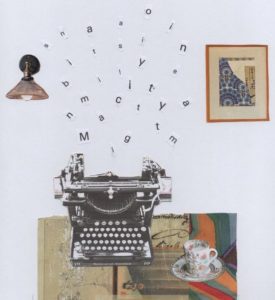
    Collage image of a typewriter on a desk, with a lamp and an abstract piece of art in a frame against a white background. cut-out letters are 'coming out' of the typewriter, hovering in the space above it.

    In other words, I always come back to writing. It is how I process, think, untangle and work out what I feel. Even when I can’t stick to writing projects or write coherent blog posts, I turn to the pages of my notebooks.

    We spiral and swirl and circle back as our energy ebbs and flows and our attention and interests flow in different directions – often returning to “abandoned” projects, meaning they were never abandoned in the first place.

    My new understanding of myself as neurodivergent has also led to a new hope: that writing those more coherent pieces may become a little easier. For one, this self-knowledge has given me some previously absent self-compassion about why I sometimes struggle so much with writing, despite my strong desire to do it. It has given me important insight into the roots of those struggles, including burnout, overwhelm and struggles with “task initiation”, but also masking (and related people-pleasing), which can show up in particularly insidious ways and immobilise me when I try to write for publication. I’ve found Marta Rose’s concept of “spiral time” particularly powerful in undermining shame about not finishing pieces of writing in an “efficient” manner. As I learned last year from Marta on the Neuroqueering Your Creative Practice course, neurodivergent creative practice rarely unfolds in a linear manner.[i] We spiral and swirl and circle back as our energy ebbs and flows and our attention and interests flow in different directions – often returning to “abandoned” projects, meaning they were never abandoned in the first place. 

    returning to creativity, craft and connection

    I recently moved my website from Wix, to participate in the boycott in solidarity with Palestinians. While researching alternative web hosts and plans, I revisited the question of whether I want to write a blog and/or newsletter.

    And what I keep coming back to is this: I still want to write about creativity, craft and connection. And: I don’t want to compartmentalise my personal and political writing from my professional identity – I have spent too much energy for too long presenting different versions of myself to different people (i.e. masking). Neither do I want to participate in a façade of “business as usual”, where genocide, coloniality, rising fascism and climate crisis are not acknowledged or circumvented to avoid appearing “political”.

    I want to continue thinking and writing about creativity from a critical, anti-capitalist and social justice-oriented perspective (something I started in this blog post): an expansive, community- and world-building creativity. From a more personal perspective, as a “recovering” academic and late-diagnosed autistic person, reconnecting with creative practice has felt like a complicated but necessary, life-giving process, undeniably connected with my sense of identity and self. It is something I want to continue exploring, not just privately, but also in conversation with others.

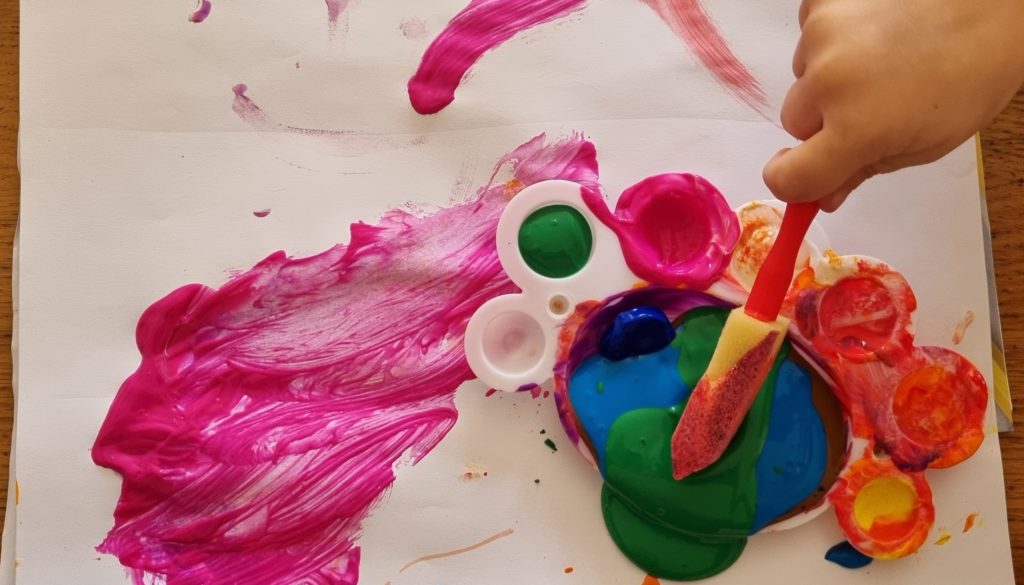
    Photo of a piece of paper with bright colours of acrylic paint. A white child's hand holds a foam paintbrush, dipping it into green and blue paint.
    Creative practice, toddler-style.

    As someone who spends many of my waking hours thinking about and immersed in written words – for work, for fun, and most of all as a necessary personal practice of meaning-making – it is possible I also have some useful insights to share on the topic of writing craft. I want to clarify and discuss what I have learned about crafting engaging and powerful prose – as an editor and writer, but perhaps most importantly as a reader – with a particular focus on how we can write to make a difference: how we can communicate our ideas, experiences and research in ways that are compelling and authentic.

    And then there’s connection… the word feels both trite and profound, but it is one that continues to compel and propel me. When I started my editing business six years ago, I decided to call it write/connect, because those two words, in my mind, feel so linked and so central to what I am interested in. Writing, for me, is about connection: I write to connect – with myself, with others and with what is happening in the world.

    …writing towards connection feels like one way to orient towards social justice.

    Given the current world system is predicated on disconnection – on separating different groups of people from each other, dehumanising those considered “other” – writing towards connection feels like one way to orient towards social justice. It reminds me of a powerful passage from Elaine Castillo’s How to Read Now, in which she challenges the American (and, I would say, more broadly Western capitalist) obsession with “freedom” – particularly the idea of artistic freedom as a right to create whatever you want without any need to consider your connection to or impact on others:

    But what if our artistic practices were founded not on the presumption of artistic freedom – certainly, at least, not the individualistic, late capitalist brand of American freedom? … What if art was the space not for us to enjoy our freedom, but for us to encounter our bondages – and our bondedness? That in our art making and our art consumption, we paid attention not just to the things that made us feel free, expansive, containing multitudes, but to the things that remind us we are not just free but delimited – the things that make us feel our smallness, our ordinariness, our contingency, our vulnerability and reliance? The things that make us feel not neutral but named – actually known by the world, so that we might be truly in it, and of it? (pp. 72–73)

    Since reading this book last year, my thoughts have returned again and again to Castillo’s notion of bondedness, particularly as I’ve been grappling with my own understanding of creativity, as well as my own feelings and struggles around “art making”. It strikes me that Castillo’s bondedness has something in common with my belief that writing is (or at least can be) about connection: it can move us towards being “known by the world, so that we might be truly in it, and of it”.

    So, I am reviving the blog. I plan to use this space to share my reflections, learning and research in various forms – mini-essays, deep craft dives into compelling non-fiction books, more creative and experimental pieces, potentially some interviews down the line – as I continue being fascinated by writing and creative practice, and particularly the ways in which these can help us connect with each other and orient us towards a more socially just world.

    If you want to follow along, writing, thinking and learning together, I would love it if you would sign up to my newsletter (below), where I will share new posts and other updates.


    [i] I highly recommend this course, co-facilitated by KR Moorhead, Meg Max and Marta Rose.