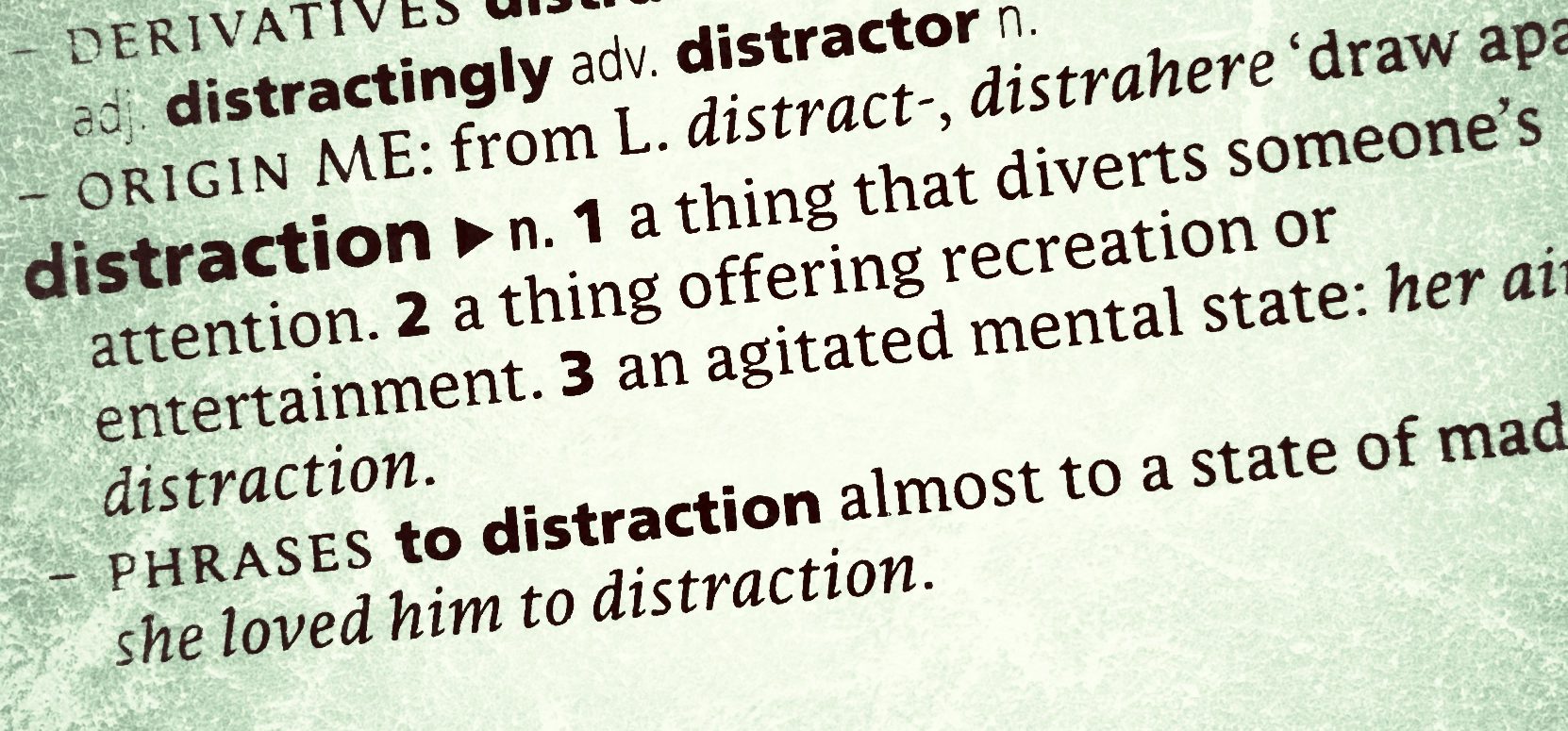
In this series, I am getting curious about attention. Why can it be so hard to pay attention to the things we want to pay attention to? And why do we give so much attention to things we’d rather not? My interest in this topic originates with adrienne maree brown’s emergent strategy principle, “what you pay attention to grows”. I wrote more about that in part one. In part two, I argued for the importance of attending to our passionate interests. This piece is all about that nemesis of attention: distraction.
~~
Spend more time reading books.
This was one of the intentions I set for myself at the start of this year. It doesn’t sound like it should be hard. Even reading those five words, I feel joy and spaciousness. I love sinking deeply into thoughtfully written words – to learn, to imagine, to delight, to rest. In other words, I love books. Always have. Yet, every year it feels like I spend less time reading them. As a kid and teenager, I spent hours at a time engrossed in a book. Now, I rarely read a book uninterrupted for more than 30 minutes at a time – and not as often as I would like to.
It’s now May and there has been a slight increase in my book-reading time, but not enough to suggest a significant change. It’s the usual story with familiar culprits: my smartphone, my laptop, the Internet. Almost every time I reach for my phone, even if I just meant to check the weather, I’m still there 15 minutes later, trying to remember why I picked it up in the first place. And despite repeatedly setting rules for myself about not bringing my phone into my bedroom, half the time I’m still there scrolling late in the evening – a time that used to be reserved for books only.
Why has it become so hard to attend to a practice that I love – a practice that feels essential to my learning, emotional regulation and connection to the world?
it’s capitalism, duh
Many have researched the impact the attention economy has on our ability to focus. I don’t have anything new to say about it, so I’ll return here to a book that is truly dear to me: Jenny Odell’s How to Do Nothing: Resisting the Attention Economy. Here is Odell’s definition of distraction:
To pay attention to one thing is to resist paying attention to other things; it means constantly denying and thwarting provocations outside the sphere of one’s attention. We contrast this with distraction, in which the mind is disassembled, pointing in many different directions at once and preventing meaningful action. (p. 81, my emphasis)
I love Odell’s invocation of a disassembled mind, as it feels so resonant with my everyday experience and absorption online. These days, I regularly find myself reaching for the phrase I can’t pull myself together. It’s a term that’s loaded with judgement, but I mean it more literally than judgementally: my mind feels fractured to the point where it feels like I can’t (re)assemble myself.
The fact that so many of us are feeling increasingly disassembled in these times is not incidental. In the first post of this series, I wrote:
Assaults on our attention are not new, but inherent to (racial, patriarchal, ableist) capitalism. It is only the technological means by which this occurs that have changed.
Having said that, these technological developments do matter. Their effects are unprecedented: the attention economy has enraptured us at a time of rapidly intensifying crisis for humanity.
Distraction is in-built to capitalism through a culture that keeps us hooked into supremacist, consumerist agendas. Toni Morrison’s comments on racism as distraction, from a 1975 speech, are still frequently cited, and for good reason:
…the very serious function of racism … is distraction. It keeps you from doing your work. It keeps you explaining, over and over again, your reason for being. Somebody says you have no language and so you spend 20 years proving that you do. Somebody says your head isn’t shaped properly so you have scientists working on the fact that it is. Somebody says that you have no art so you dredge that up. Somebody says that you have no kingdoms and so you dredge that up. None of that is necessary. There will always be one more thing. (PDF link)
Speaking long before the existence of social media, Morrison was addressing a somewhat different kind of distraction, perhaps not so much predicated on a disassembled mind, but still very much intent on keeping oppressed people in their place, preoccupied with the oppressor’s agenda.
Wresting our attention away from agendas designed to distract us is the basis for liberatory action. Yet, despite many of us seeing through the intent of these systems, we seem to be finding it increasingly hard to break out of the trance. This is where the attention economy has surpassed its predecessors: it’s consumer capitalism on speed.
That sense that I have access to an infinite amount of information at my fingertips means I never feel fully satisfied by what I’m reading or experiencing – I’m always scanning for more.
The infrastructure underpinning the dominant commercial digital technologies has trained us to always want more. That sense that I have access to an infinite amount of information at my fingertips means I never feel fully satisfied by what I’m reading or experiencing – I’m always scanning for more. I haven’t done the maths, but it is entirely possible that I spend more time browsing books online – following algorithmic trails of recommendations, searching for books about whatever topic I’m currently interested in and, yes, buying new books – than I do reading the actual books I already own or have borrowed from the library.
A mind trained to constantly look for more finds it incredibly hard to stop and process what it is absorbing. For me, it feels like a powerless state from which it is near impossible to act in alignment with my deeper values and desires. It often feels like a personal failure, and I have to remind myself that this is structural. The corporate interests that underpin the attention economy want us right here: as passive, distracted consumers.
distraction starts early
When I started writing about distraction in relation to my online experience, it struck me that there is another sphere of life in which people often talk about distraction: parenting and childcare. In this context, distraction is frequently an intentional strategy. Adults often use distraction tactics to get children to do/not do something.
I hold my hands up: I am not immune to this. I am not super proud of the fact that I let my 3-year-old watch kids’ music videos on my phone when I get them dressed and brush their teeth in the morning, but it does have the magical effect of making them stay in one place for five minutes, and so I have taken to doing it.
Children’s screen time is a big area of discussion and controversy that I won’t get into. Most parents and caregivers do the best we can given our circumstances. When I notice myself reaching a stage of sensory overload, I know I can let CBeebies entertain my kid for a while, giving me some time to breathe and regulate. It feels like the best option available to me in those moments. Thankfully, my kid also loves books (I may have had some influence there!), so we also have plenty of reading time, which is my favourite kind of cosy downtime.
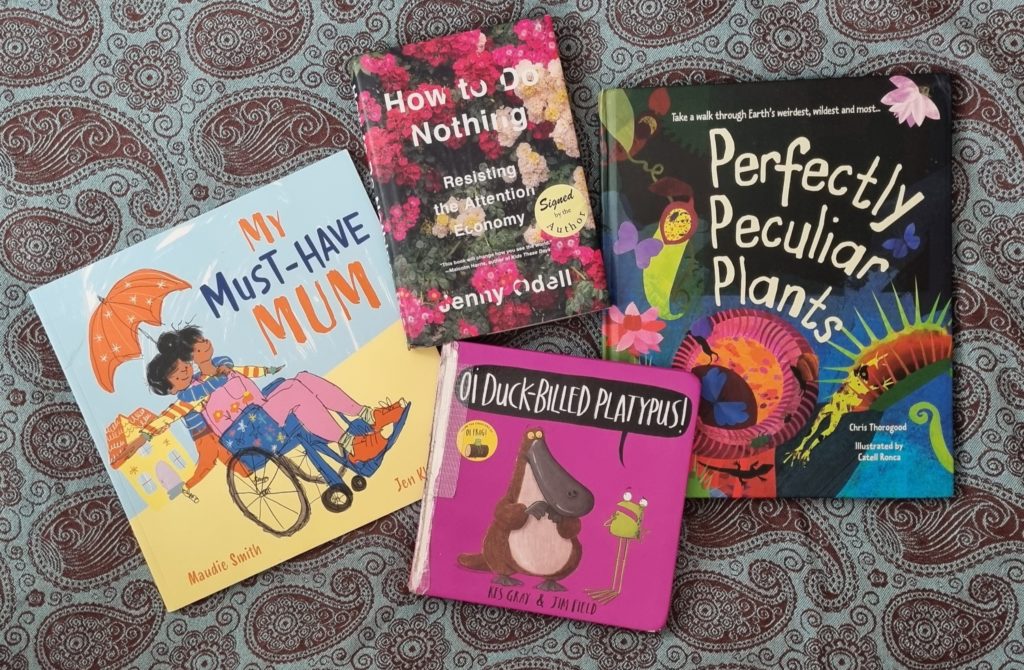
But another long-honoured childcare strategy involves distracting kids when they’re crying, angry, or feeling other strong emotions.
You’re upset? Here, let me dangle this toy in your face.
You’re sad? Here, let me tell you all the reasons you should be happy instead.
Most of us do this to some extent – parents and other childcare providers – and I’m not writing this to pass judgement, but more to note how ingrained it is in our culture and how difficult it can be to resist.
To give one example, when children are sad when their parents leave them at nursery, the staff will often distract them with toys or activities. I understand the impulse and the practical reasons why this may be necessary (and don’t get me wrong: the staff at my kid’s nursery are great, kind and endlessly patient – not to mention under-resourced!). But I’ve had to fight my people-pleasing demons and practise staying rather than rushing out the door, giving my kid another hug and some space to feel sad about our impending separation – rather than encouraging them to shut down their emotions.
As someone who grew up not understanding my emotions or how to express them, I feel really strongly about the importance of supporting young people to become fully feeling humans. I am in no way perfect in this regard, and I often find it challenging to stay present with my kid’s strong emotions. But the way our culture teaches kids that strong, difficult feelings should be immediately suppressed is troubling – and central to the deep inequalities and crises we face today. This is how we have ended up in a society where we can’t sit with our difficult feelings. We are collectively distracted.
(re)assembling ourselves
As I was writing this piece – slowly, which is the only way I can really write, thinking and feeling my way through – I read How to Do Nothing again. Re-reading this book felt like such a gift, reminding me both of the necessity of slowing down to notice and process what is happening around us, and also of the importance of returning to the sources of knowledge and wisdom that we value (whether these are off- or online), to deepen our engagement with them, rather than always seeking out something new.
As the world burns, we are becoming increasingly disassembled.
I love that Odell’s work is expressly anti-capitalist. Her critique is not of the internet or online media per se, but of “the invasive logic of commercial social media and its financial incentive to keep us in a profitable state of anxiety, envy, and distraction” (p. xii).
Similarly, my point here in contrasting my wish to spend more time reading books with the addictive pull of my devices is not any simplistic books = good / screens = bad. It’s about my ability to think and act from a space of deep connection with myself and the world around me. This is what makes the attention economy – or should we call it the distraction economy? – and its impact on our minds and bodies a justice issue. As the world burns, we are becoming increasingly disassembled. This disassembly is designed to make us feel some combination of bad about ourselves and not very much about anything else.
I was struck, a few months back, by Glory Edim’s (of Well-Read Black Girl) description of the effect of doom scrolling:
It creates the illusion of knowing without the responsibility of being changed. You can absorb thousands of stories on Instagram and never metabolize a single one. So often we feel “informed” and yet untouched by experiences.
Absorb vs metabolise. Being informed vs being touched.
We are simply physically unable to metabolise the amount of information we are faced with on a daily basis. So we shut down and numb ourselves, by necessity.
But metabolising what we encounter – at both thinking and feeling levels, if I may so artificially separate them – is the starting point for connection, with ourselves and with others. It is a process of (self-)assembly.
Clearly, I’m not writing this from a position of having figured this out. I’m just here, imperfectly feeling my way towards something more connected, more collective. For me, it always seems to come back to feelings. To (re)assemble, we need to be able to connect to our emotions – and we need to learn to sit with them, even the difficult ones. That is the only way we can meet this moment – of racial capitalism in its violent death throes – and imagine and build towards something different.